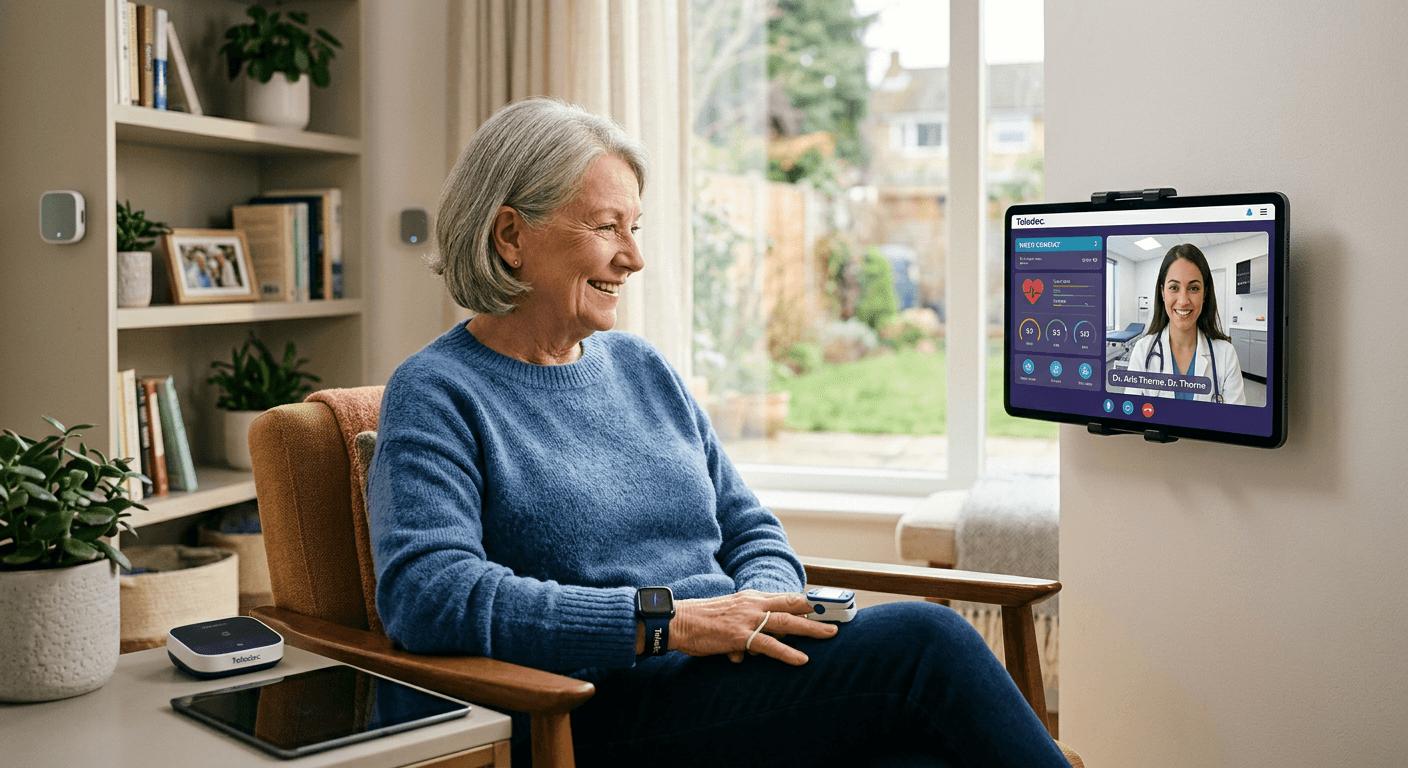
What if your smartphone camera could check your vital signs during a telehealth call? That future is arriving now. Virtual care giant Teladoc has officially integrated new artificial intelligence features into its platform, including camera-based vitals monitoring and an AI-powered scribe.
This move, reported by Healthcare Dive, comes as the company works to innovate following significant financial setbacks. The new tools are designed to enhance the virtual care experience for both patients and providers:
- AI Scribing: This feature automatically transcribes and summarizes the conversation between a doctor and patient, freeing the clinician from extensive note-taking. The goal is to allow for more focused, personal interaction during appointments.
- Remote Vitals Monitoring: Using a patient's smartphone or computer camera, the system can now measure key vital signs. This adds a crucial layer of clinical data to virtual visits, which have traditionally relied on patient self-reporting.
Why This Matters for Digital Health
At Medicup, we see Teladoc's announcement as a powerful validation of the future we are building. These advancements aren't just flashy features; they represent a fundamental shift toward making virtual care more effective, efficient, and human-centered.
For providers, AI scribing is a game-changer in the fight against burnout. By automating the burden of documentation, doctors can dedicate their full attention to listening and connecting with their patients—the very reason they entered medicine. For patients, camera-based vitals monitoring helps bridge the gap between virtual and in-person care, allowing for more comprehensive and data-driven diagnoses from the comfort of home.
As the digital health landscape evolves, integrating smart, supportive AI and remote monitoring tools is no longer a luxury, but a necessity. It’s how we deliver on the promise of telehealth: accessible, high-quality care for everyone, everywhere.
Source: Healthcare Dive