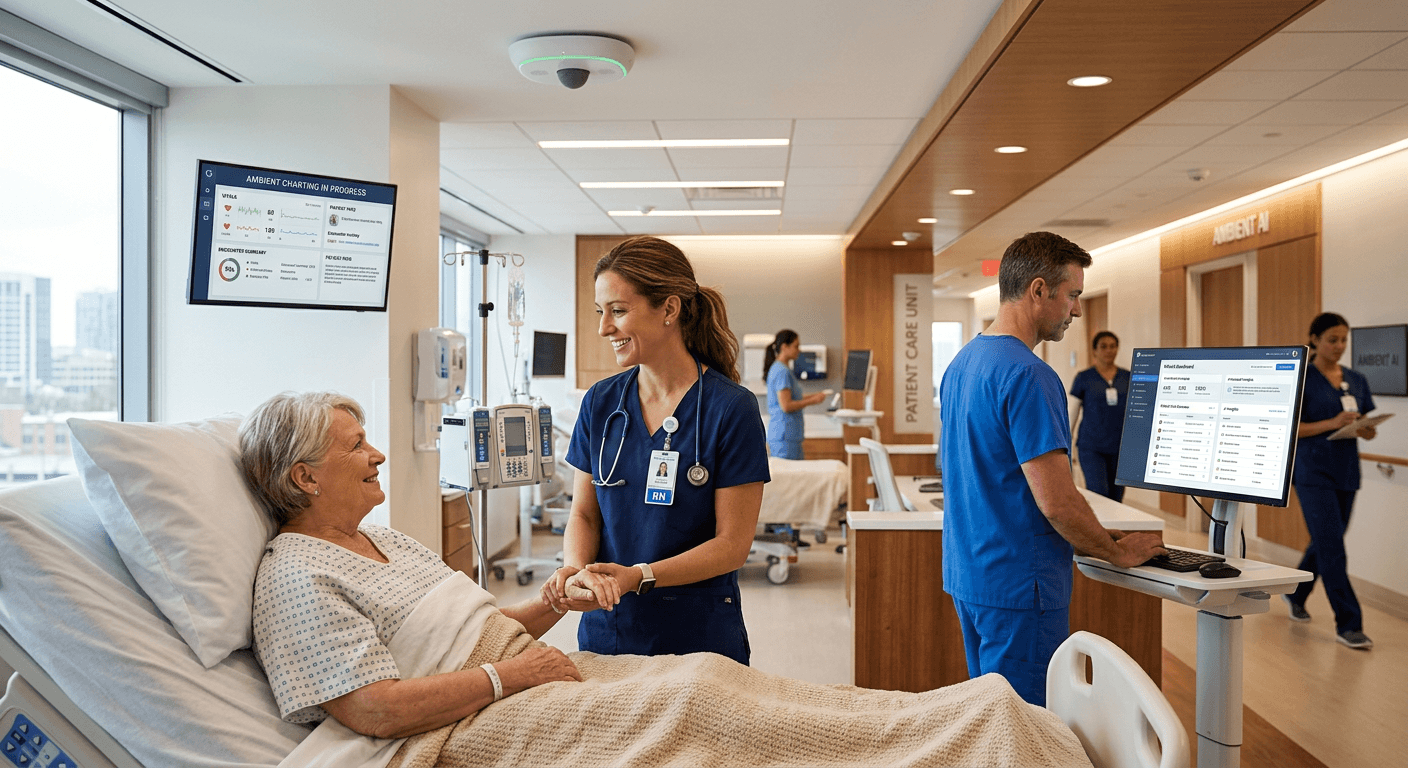
Artificial intelligence is increasingly being positioned as a powerful ally for nursing teams, with tools like ambient charting leading the charge. The promise is significant: to automate documentation and administrative tasks, freeing nurses from their keyboards to spend more time on what matters most—direct patient care.
However, a critical question looms over this technological wave. Will these AI tools truly act as helpful assistants, seamlessly integrating into the workflow? Or will they become yet another fragmented piece of technology that clinicians have to learn, manage, and troubleshoot, ultimately adding to their burden?
The goal is clear: reduce burnout and improve the quality of care by restoring the focus on the patient. Ambient charting, which can listen to and transcribe clinical conversations into structured notes, is just the beginning. The potential for AI to assist with scheduling, supply management, and even flagging potential patient risks is enormous.
At Medicup, we believe the answer to avoiding a 'fragmented layer' of tech lies in integration. AI shouldn't be a separate app or a clunky add-on. It should be woven directly into the core digital health platform—the EMR, the telehealth interface, the prescribing tools. When AI works silently in the background to summarize a telehealth visit or prepare a chart, it becomes a true assistant. This approach ensures that technology serves the clinician, empowering them to provide more focused, empathetic, and effective care, whether in-person or online.
Source: [MedCity News](https://medcitynews.com/2026/09/ai-goes-all-in-to-support-nursing-teams-ambient-charting-is-just-the-start/)