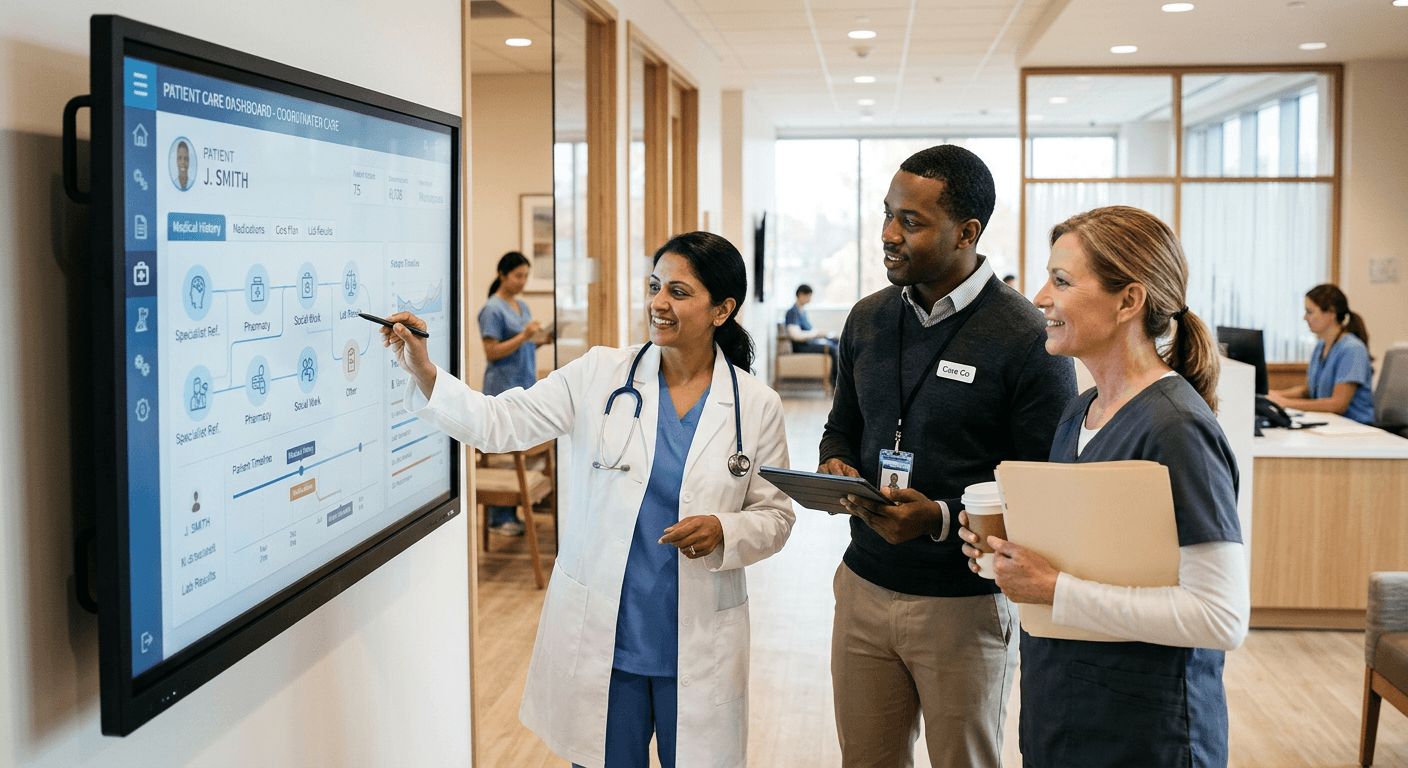
In an ideal healthcare journey, every doctor, specialist, and pharmacist you see is on the same page. They know your history, understand your current treatments, and work together as a unified team. This concept is called coordinated care, and it’s powered by a crucial piece of technology: the Electronic Medical Record (EMR).
From Paper Files to a Single Source of Truth
Not long ago, a patient's medical history was a collection of paper files scattered across different clinics. Sharing information was a slow process involving faxes, phone calls, and mailed documents, creating opportunities for information to be lost or overlooked.
EMRs change this dynamic entirely. They create a centralized, digital hub for a patient's complete health information. From allergies and medications to lab results and imaging reports, everything is stored in one secure, accessible location. This ensures that every authorized member of a patient's care team is working with the same up-to-date information.
The Role of EMRs in Coordinated Care
EMRs are the connective tissue that enables different healthcare professionals to collaborate effectively. Here’s how they support a more integrated approach to your health:
- Improved Communication: Instead of relying on phone tag, providers can communicate directly through secure messaging systems built into the EMR. A primary care physician can instantly share notes with a specialist, or a pharmacist can flag a potential drug interaction, all within the context of the patient's record.
- Reduced Redundancy and Errors: When all providers can see a patient's history, the risk of ordering duplicate tests or prescribing conflicting medications decreases significantly. Access to a complete list of allergies and past conditions helps improve patient safety.
- Holistic Decision-Making: For patients with chronic conditions or complex health needs, care often involves a team of specialists. An EMR gives every provider a 360-degree view of the patient's treatments, progress, and challenges, allowing for more informed and collaborative decision-making.
- Empowering the Patient: Many EMR systems include patient portals, which give you direct access to your own health information. You can review test results, check appointment notes, and manage your care plan, making you a more active and informed participant in your own healthcare journey.
A Foundation for Modern Healthcare
Electronic Medical Records are far more than digital filing cabinets. They are dynamic tools that form the foundation of modern, team-based healthcare. By breaking down information silos and fostering seamless communication, EMRs play an indispensable role in delivering the safe, efficient, and coordinated care that every patient deserves.