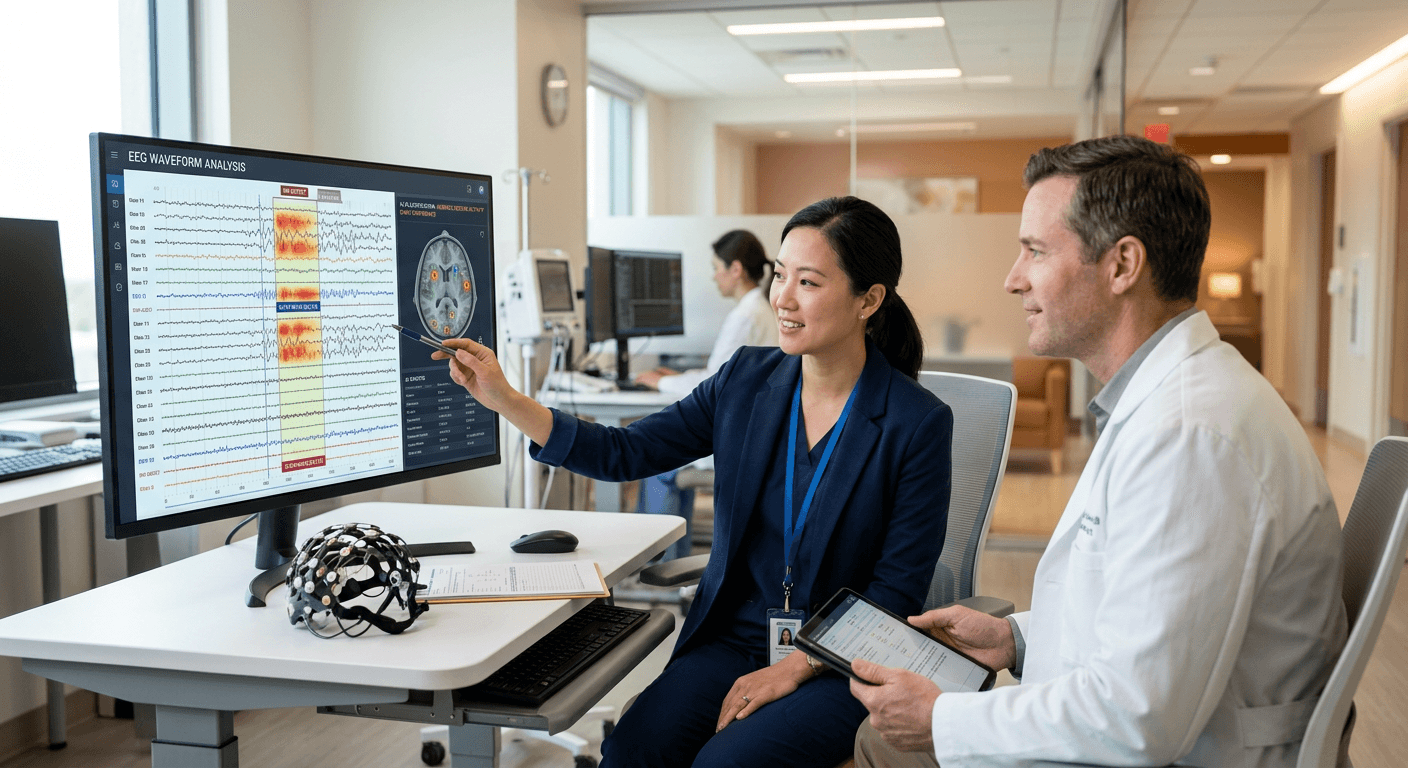
An electroencephalogram (EEG) translates the brain's electrical symphony into a complex series of lines, a language that only highly trained neurologists can interpret. This analysis is crucial for diagnosing conditions like epilepsy, but it's a meticulous and time-consuming process, often leading to diagnostic delays. What if we could teach a machine to read this language, too?
A new review in The Lancet Digital Health explores exactly that, detailing the rise of artificial intelligence models designed for the automated and semi-automated analysis of clinical EEGs. Authored by a global consortium of researchers from institutions like the University of Copenhagen, Duke University, and Monash University, the work highlights a major leap forward in neurology.
Instead of replacing specialists, these AI tools act as powerful assistants. They can sift through hours of EEG data, flag potential abnormalities like seizure activity, and present their findings to a clinician for final review. This semi-automated approach can dramatically speed up the diagnostic workflow, reduce the burden on overwhelmed specialists, and improve the accuracy of interpretations.
The Medicup Perspective: Smarter Tools for Better Access
At Medicup, we see this as a pivotal development for the future of digital health. The ability to automate EEG analysis has profound implications for telehealth and remote patient care.
Imagine a patient in a rural area undergoing an ambulatory (at-home) EEG. The data could be securely uploaded and pre-analyzed by an AI, with critical segments flagged for immediate review by a remote neurologist. This hybrid human-AI model makes specialized neurological expertise accessible regardless of geography, shortens the agonizing wait for results, and allows providers to manage more patients with greater efficiency.
By empowering clinicians with intelligent, time-saving tools, we're not just advancing technology; we're breaking down barriers to essential medical care. This research is a blueprint for a future where AI and human expertise collaborate to deliver faster, smarter, and more accessible healthcare for everyone.
Source: [PubMed](https://pubmed.ncbi.nlm.nih.gov/42692953/)