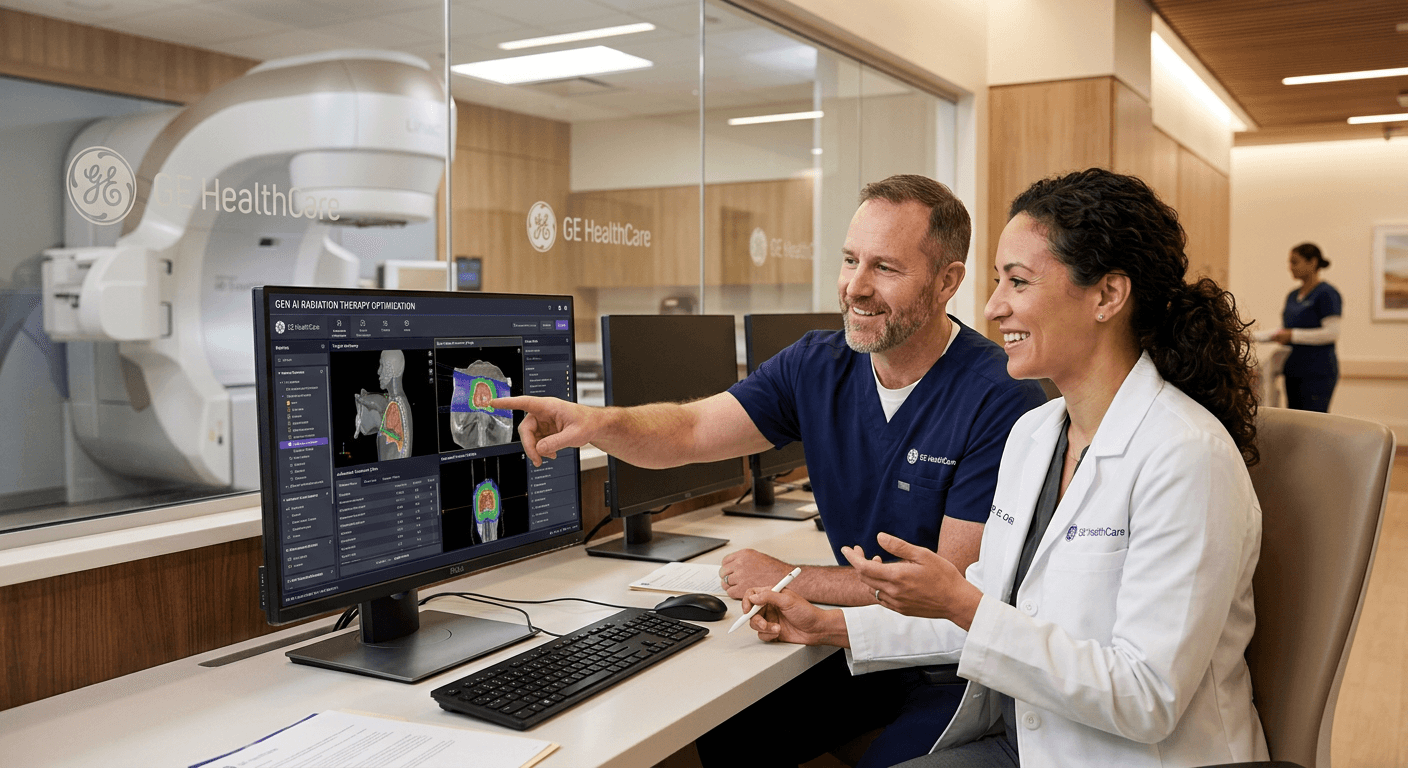
The complex process of planning radiation therapy for cancer may soon get a powerful new assistant. GE HealthCare has announced a new collaboration with a research team from Mass General Brigham to explore how generative AI can be applied to radiation therapy workflows.
The goal of the partnership is to use this advanced AI to help care teams more easily and quickly access patient-specific information. In the high-stakes world of oncology, creating a precise radiation plan requires sifting through vast amounts of data for each individual. This initiative aims to streamline that process, potentially leading to more efficient and personalized cancer treatments.
By automating parts of the information-gathering and planning stages, the technology could free up clinicians from time-consuming manual tasks, allowing them to focus more on direct patient care and complex decision-making.
The Medicup Perspective
This collaboration between a healthcare technology leader and a world-class research institution is a powerful signal for the future of medicine. It highlights a core principle driving digital health forward: using intelligent tools to augment the expertise of human providers, not replace them.
At Medicup, we see this as a validation of our own mission. Whether it's an AI helping a doctor quickly review a patient's history or, as in this case, helping an oncology team design a highly specific treatment plan, the objective is the same. Better tools lead to better workflows, reduced provider burnout, and more personalized, effective patient care.
As AI becomes more integrated into specialized fields like oncology, it paves the way for broader adoption across all of healthcare. The insights gained from this project could ultimately inform how AI is used to improve diagnostics, treatment, and patient management everywhere, making sophisticated, data-driven care the standard for everyone.
Source: MedTech Dive