For the millions of people managing type 2 diabetes mellitus (T2DM), the threat of heart disease is a constant and serious concern. But what if the key to predicting that risk was already hiding in plain sight within routine blood work? A new AI-driven system is showing how that's possible.
Researchers have developed a clinical decision support tool that can predict the likelihood of coronary artery disease (CAD) in patients with T2DM. As detailed in a study by Mehboob Zahedi, Pradeep Kumar Dabla, and others, the system doesn't require expensive or invasive new tests. Instead, it uses an advanced AI technique called "deep fusion learning" to analyze a patient's existing clinical laboratory parameters—the results from standard lab work.
The model intelligently combines data points from various tests to identify subtle patterns that indicate a higher risk for CAD, a leading cause of heart attacks. This provides doctors with a powerful, data-driven tool to assess risk much earlier than might otherwise be possible.
The Medicup Perspective
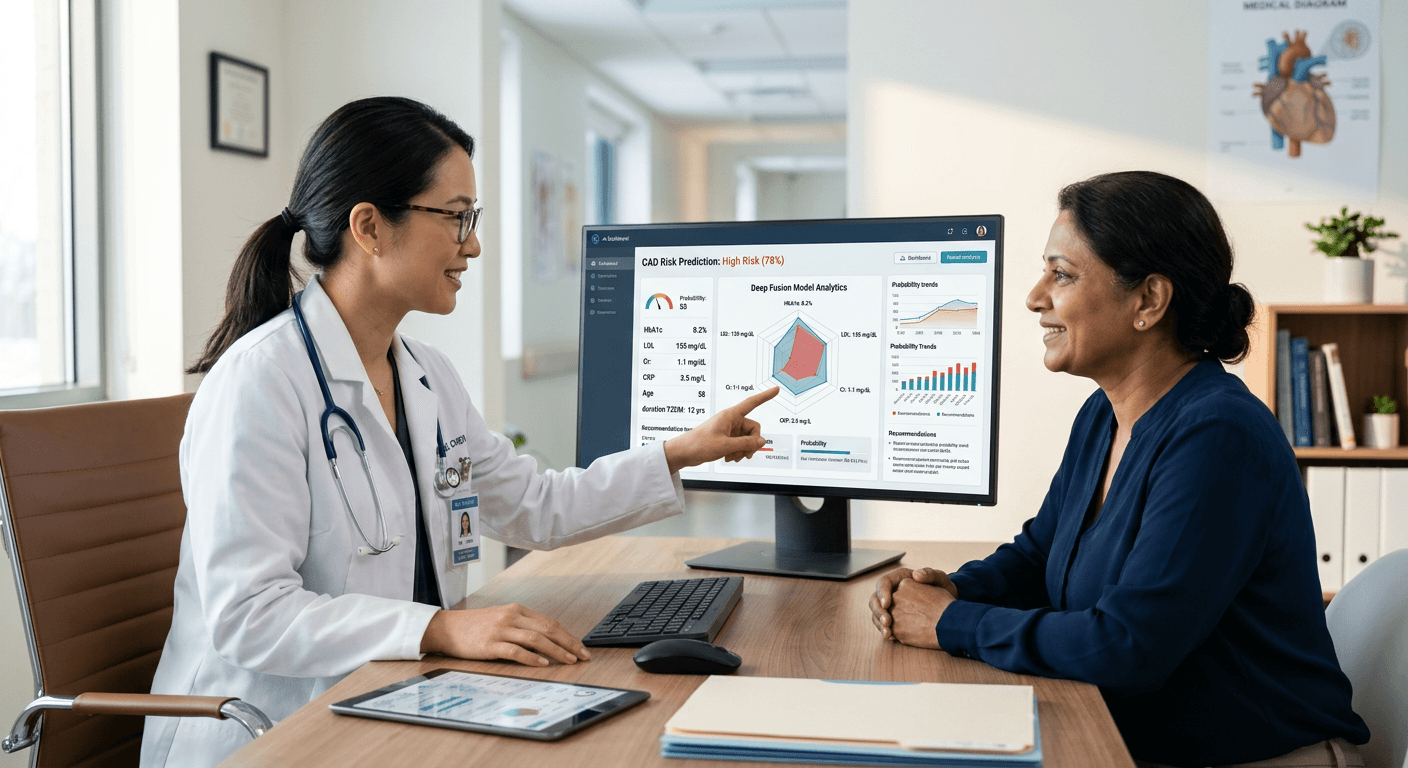
This is precisely where the future of digital health is headed. At Medicup, we see this as a game-changer for both patients and providers on telehealth platforms. Imagine a patient with diabetes having a virtual consultation. Their provider orders routine labs, which are then automatically analyzed by an integrated AI tool like this one within their electronic medical record.
During the follow-up telehealth visit, the provider doesn't just have the raw lab numbers; they have a clear, AI-generated risk score for coronary artery disease. This allows for a more proactive and personalized conversation about preventative strategies, from lifestyle changes to medication adjustments. It transforms routine data collection into a powerful predictive health tool, enabling earlier interventions and better long-term outcomes for patients managing chronic conditions.
Source: PubMed