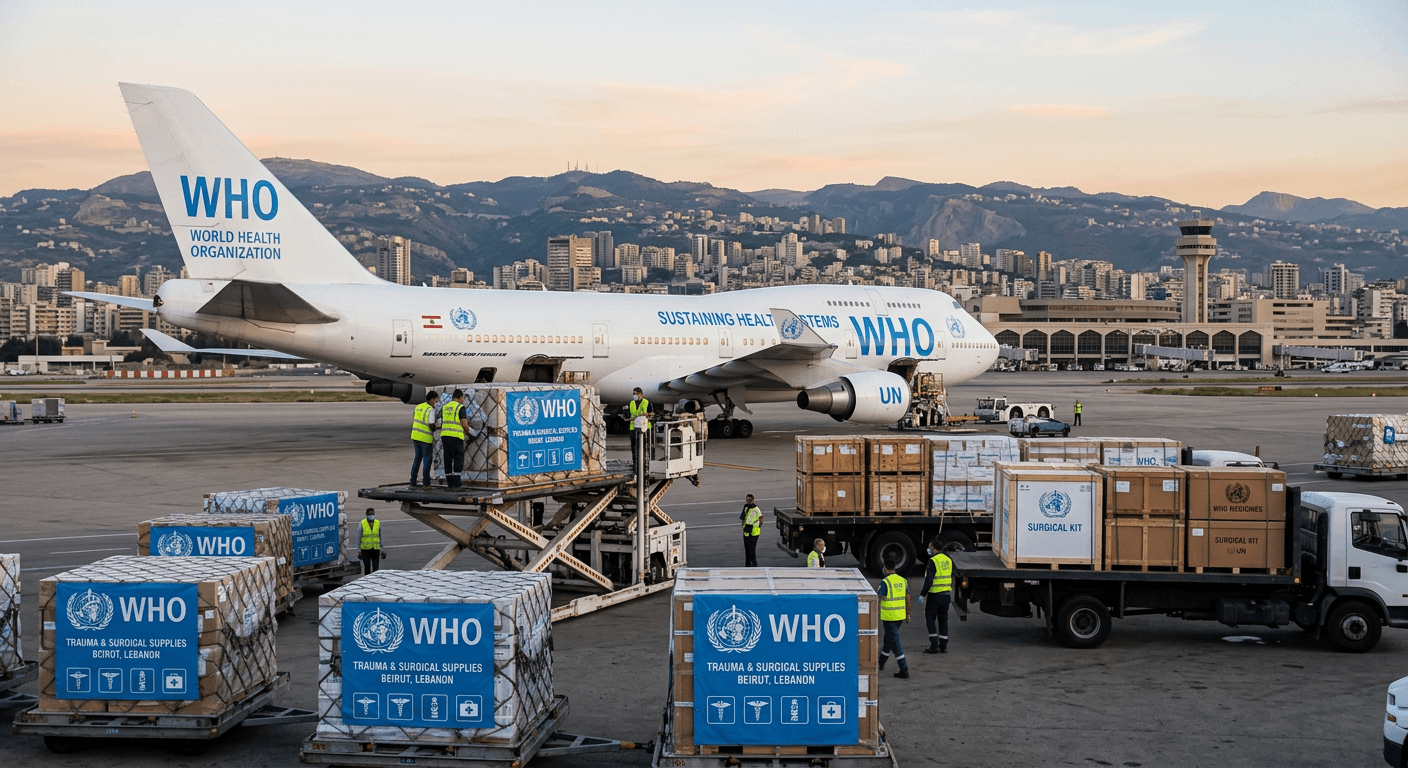
In the immediate aftermath of the massive blast that shook Beirut on August 4, the global health community mobilized. A plane carrying 20 tonnes of World Health Organization (WHO) health supplies quickly landed in the city, a critical lifeline for the thousands injured.
The shipment, airlifted from the WHO’s logistics hub in Dubai on a plane donated by the government of the United Arab Emirates, contained enough material to support 1,000 trauma interventions and 1,000 surgical interventions. These supplies are essential for treating the severe injuries and burns sustained by victims of the explosion, directly empowering the frontline medical teams working tirelessly in overwhelmed hospitals.
This rapid, physical response underscores a fundamental truth of emergency medicine: in a mass casualty event, there is no substitute for tangible supplies like surgical kits and trauma dressings. However, it also brings into focus the powerful, complementary role that digital health can play in amplifying the effectiveness of such a response.
The Medicup Perspective: Supporting the Front Lines Digitally
While platforms like Medicup can't airlift bandages, they can provide the digital infrastructure that makes every physical resource count. In a crisis scenario like the one in Beirut, telehealth and other digital tools can be deployed to:
- Triage and Direct Patients: Virtual consultations can help quickly assess less critical injuries, directing patients to appropriate care settings and keeping emergency rooms clear for the most severe cases.
- Provide Specialist Support: Local doctors facing unprecedented injuries can use telehealth to instantly consult with trauma surgeons, burn specialists, or other experts from anywhere in the world, bringing global expertise directly to a patient's bedside.
- Coordinate Care: A centralized Electronic Medical Record (EMR) system can be invaluable for tracking patients as they are moved between facilities, managing dwindling supplies, and ensuring continuity of care amidst the chaos.
- Deliver Mental Health Services: The psychological toll on survivors, families, and first responders is immense. Teletherapy provides a scalable, accessible way to deliver crucial mental health support in the weeks and months following a traumatic event.
The heroic efforts on the ground in Beirut, supported by the WHO's vital shipment, are paramount. By integrating digital health solutions, we can help these efforts go further, ensuring that expertise and organization are as readily available as the physical supplies themselves.
Source: World Health Organization