
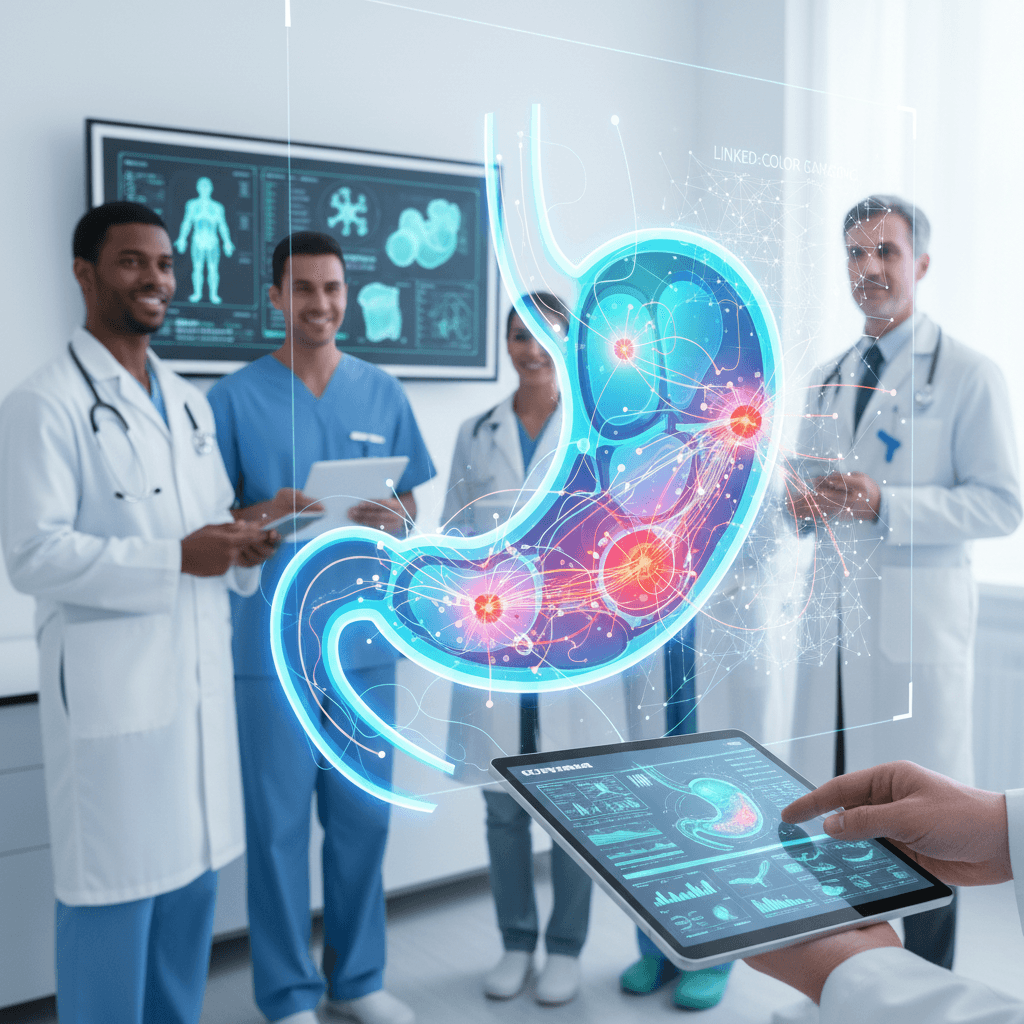
What if a computer could see what the human eye might miss, especially when it comes to detecting cancer? For gastroenterologists performing endoscopies, that future is getting closer. A promising pilot study highlights a powerful new combination of tools that could significantly improve the early diagnosis of gastric cancer.
Researchers investigated the effectiveness of pairing artificial intelligence with a specific technology called Linked-Color Imaging (LCI) during endoscopic procedures. LCI is a specialized imaging mode that enhances the color contrast of the stomach's lining, making subtle tissue abnormalities and lesions more visible to the naked eye. The AI system, trained on countless images, then analyzes this enhanced view in real-time to flag suspicious areas that might indicate early-stage cancer.
This study, led by a team at Kyushu University in Japan, suggests that using LCI provides a distinct advantage for AI-assisted diagnosis. By feeding the AI a clearer, more contrasted image, the system can more accurately identify potential cancers that might otherwise be overlooked during a standard procedure. Think of it as giving a super-smart assistant a better pair of glasses to do its job.
The Medicup Perspective
This research is a perfect example of how digital health tools are not replacing clinicians, but augmenting their skills. For patients, the benefit is clear: a better chance at catching a serious disease like gastric cancer at its earliest, most treatable stage. For providers, it represents a powerful co-pilot in the procedure room, reducing the risk of missing subtle lesions and increasing diagnostic confidence.
At Medicup, we see this as the frontier of diagnostic medicine. Integrating intelligent tools directly into clinical workflows enhances the quality and precision of care. As AI models become more sophisticated and specialized imaging becomes more common, we can expect to see these technologies become the standard of care, leading to better patient outcomes across a wide range of diseases.
Source: [PubMed](https://pubmed.ncbi.nlm.nih.gov/42524027/)