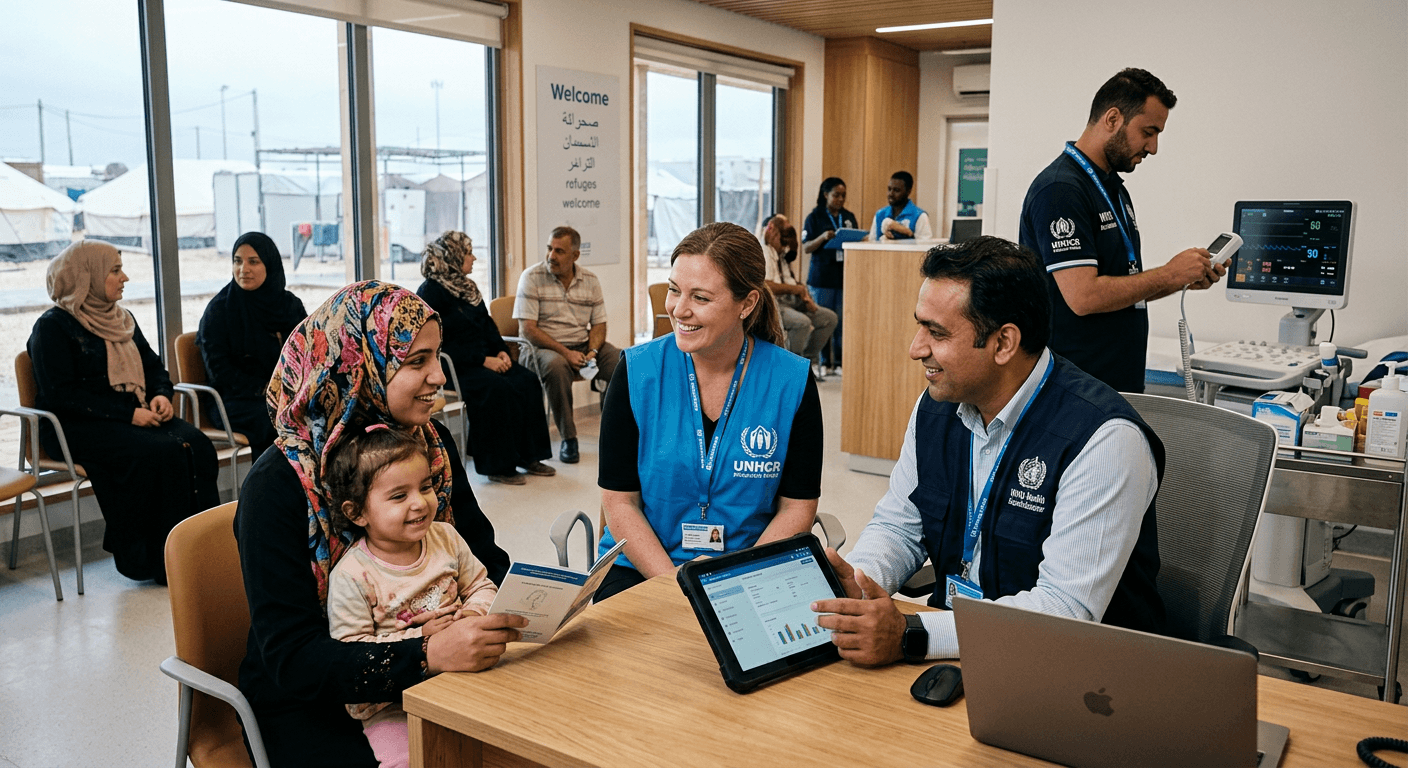
Seventy million people around the world have been forcibly displaced from their homes. Providing consistent, quality healthcare to a population this large—and this vulnerable—is one of the most significant public health challenges of our time.
In a major step to address this crisis, the World Health Organization (WHO) and UNHCR, the UN Refugee Agency, have signed a new agreement to strengthen and advance health services for these populations. The pact updates a previous 1997 agreement, renewing the commitment to protect the health of displaced people globally.
A key, urgent goal of the partnership this year is to support efforts to protect these 70 million people from COVID-19. The challenge is immense: the displaced population includes roughly 26 million refugees and another 40 million who are internally displaced. Compounding the problem, about 80 percent of the world's refugees are sheltered in low- and middle-income countries, many of which have weak and overburdened health systems.
At Medicup, we see this as a powerful call to action for the digital health community. The logistical hurdles of providing care to mobile, often undocumented populations in resource-strapped regions are exactly where telehealth and digital tools can make a life-saving difference. Secure electronic medical records can ensure a patient's health history travels with them, no matter where they go. Telehealth platforms can connect displaced individuals with specialists and primary care providers, overcoming geographic barriers and the limitations of local infrastructure. By enabling remote consultations and diagnostics, we can extend the reach of organizations like the WHO and UNHCR, ensuring that access to care is a reality for everyone, everywhere.
This new agreement isn't just a policy update; it's a framework for global collaboration. Integrating modern digital health solutions will be essential to fulfilling its promise to leave no one behind.
Source: World Health Organization