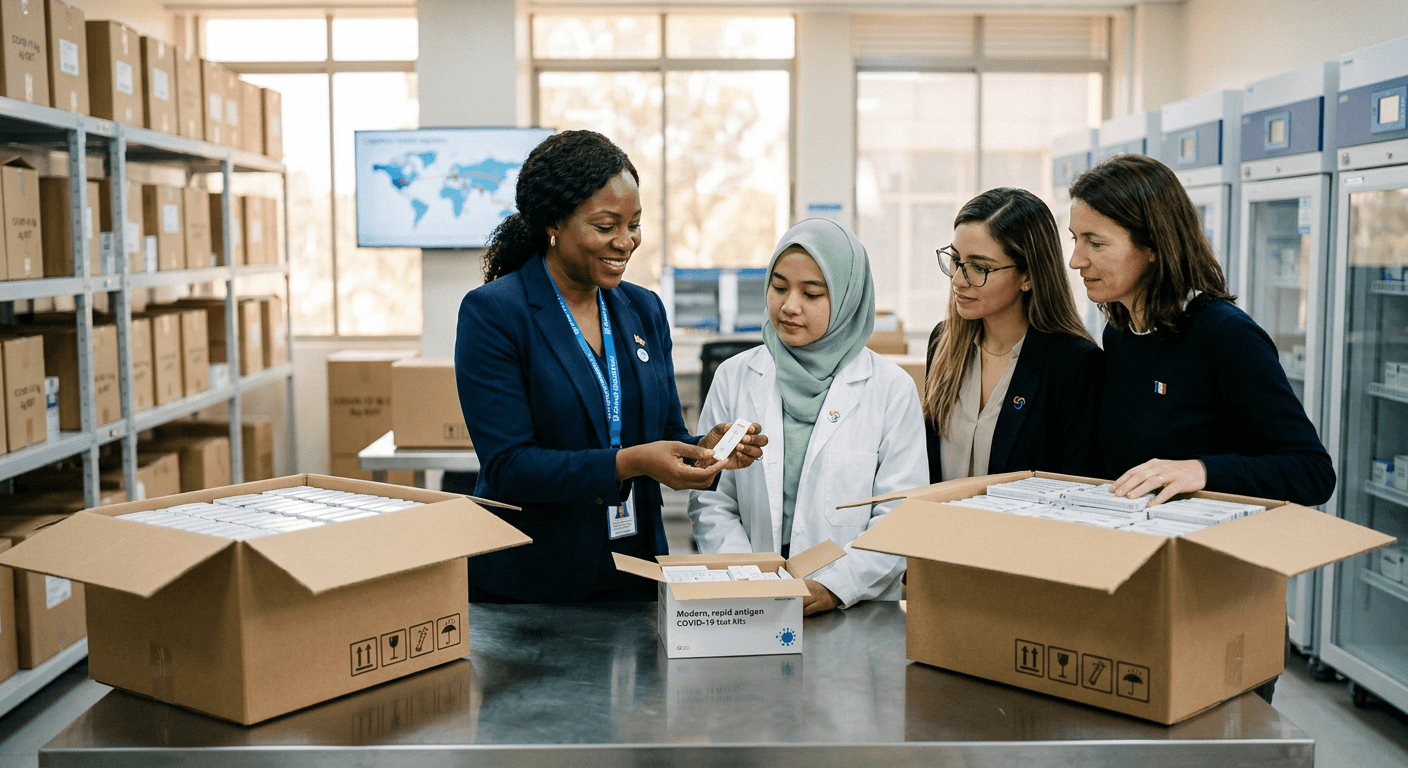
A landmark global partnership is set to deliver 120 million rapid COVID-19 tests to the low- and middle-income countries (LMICs) that need them most. This major initiative aims to dramatically expand testing capacity in areas where access to laboratory-based diagnostics is limited.
The agreement, announced by the World Health Organization (WHO), involves several key partners. The Bill & Melinda Gates Foundation has secured agreements with test manufacturers Abbott and SD Biosensor to make their innovative antigen tests available for a maximum of US$5 per unit in LMICs. This represents a significant price reduction, making widespread testing more feasible for governments with limited resources.
These aren't standard lab tests. They are rapid, point-of-care antigen tests, which can deliver results in minutes without the need for complex laboratory equipment. To ensure quality and safety, the WHO is assessing several of these tests for its Emergency Use Listing. The full access package also includes policy guidance on their use, volume guarantees from the manufacturers, and an initial US$50 million procurement fund to help governments begin deployment.
The Medicup Perspective: This initiative highlights a critical link in the chain of care that digital health is perfectly positioned to strengthen. Accessible, rapid testing is the first step. The next is immediate access to care. Once a patient receives a result—positive or negative—telehealth platforms like Medicup can provide the crucial next step: a virtual consultation. This allows patients in remote or underserved communities to connect with a provider for guidance, treatment plans, or prescriptions without traveling or overwhelming local clinics. By pairing powerful diagnostic tools with digital health infrastructure, we can create a more responsive and equitable healthcare system for everyone, everywhere.
Source: World Health Organization