
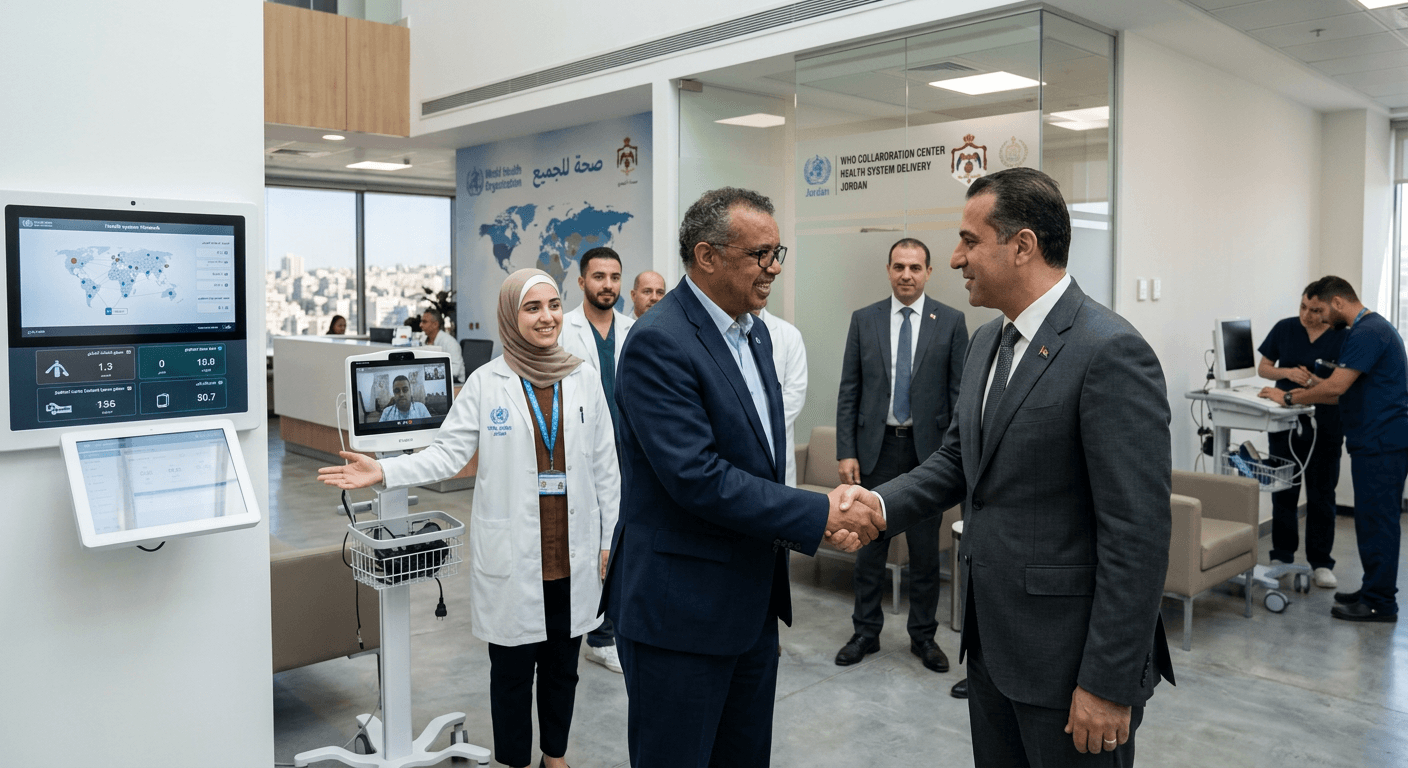
How do you build a strong, accessible healthcare system, especially in a region facing significant humanitarian challenges? A recent state visit to Jordan by the head of the World Health Organization (WHO) offers a compelling answer.
Dr. Tedros Adhanom Ghebreyesus, the WHO's Director-General, concluded a two-day visit to the Hashemite Kingdom of Jordan to underscore a powerful partnership focused on three critical pillars: achieving universal health coverage (UHC), advancing mental health services, and strengthening humanitarian health action and emergency relief.
This collaboration showcases a forward-thinking approach to public health. By prioritizing these areas, Jordan and the WHO are working to ensure that everyone can access quality care, that mental well-being is treated as an essential component of health, and that the system is resilient enough to respond to crises.
The Medicup Perspective: Digital Health's Role
This international partnership highlights a truth we see every day at Medicup: modern healthcare goals are deeply intertwined with digital innovation. The objectives celebrated in Jordan are precisely where platforms like ours can make the biggest impact.
- Universal Health Coverage (UHC): The goal of UHC is to provide all individuals with the health services they need without suffering financial hardship. Telehealth is a powerful accelerator for this mission. It breaks down geographical barriers, reduces travel time and costs for patients, and allows providers to see more patients efficiently. Digital platforms are essential tools for making universal coverage a practical reality.
- Advancing Mental Health: The focus on mental health is particularly significant. Digital health platforms offer a discreet, accessible, and destigmatized way for people to seek support. From virtual therapy sessions to AI-powered wellness tools, technology provides a vital lifeline for mental well-being, complementing traditional in-person care.
- Humanitarian Action: In emergencies, digital infrastructure is critical. Telehealth allows for remote medical consultations when travel is impossible, and electronic medical records (EMRs) ensure that patient information is secure and accessible to relief workers. These tools enable a faster, more coordinated, and more effective response in times of crisis.
The WHO's work with Jordan provides a blueprint for the future of global health—one that is comprehensive, resilient, and human-centered. We believe that embracing digital tools is not just an option but a necessity to bring this vision to life for communities everywhere.
Source: World Health Organization